











Industry Solutions
Specialized expertise across key sectors


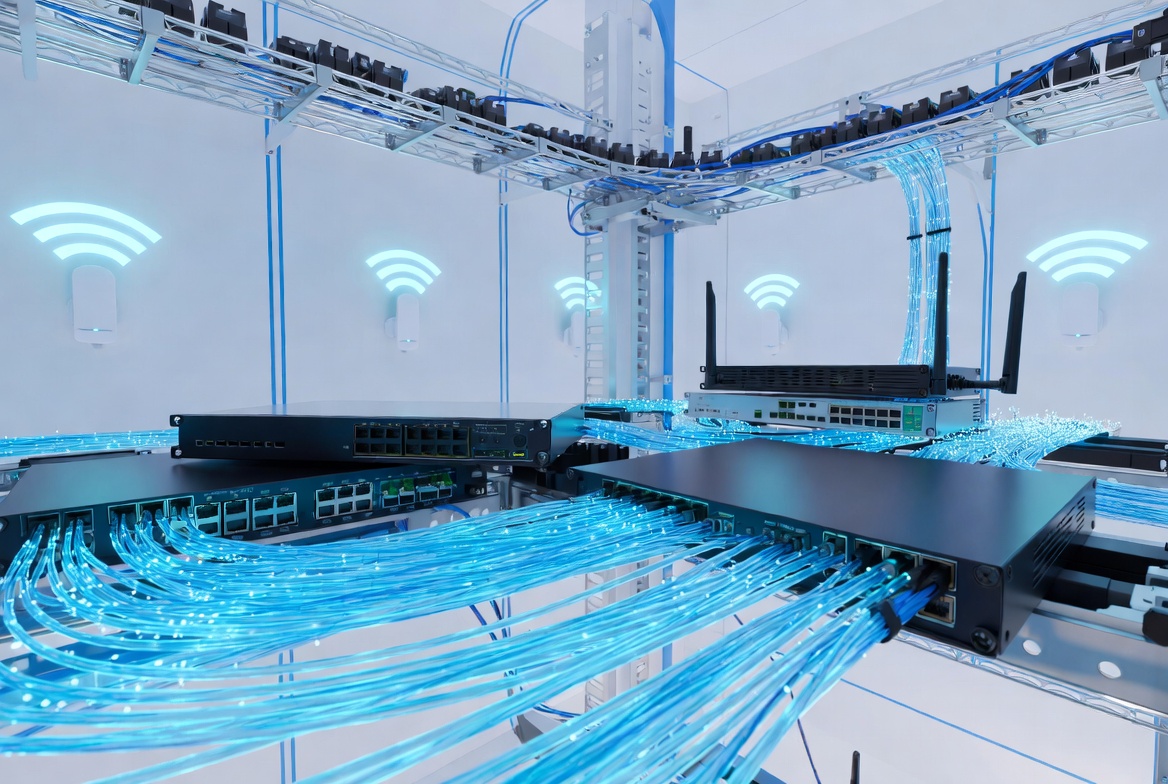
Robust, scalable connectivity architecture tailored to our partners’ evolving performance needs.
Let’s TalkEnterprise network design is a foundational pillar of digital transformation. It involves the intelligent blueprinting of network infrastructure to support seamless operations, high performance, and future expansion. This includes designing and deploying high-capacity fiber backbones, structured cabling grids, SD WAN solutions for intelligent routing, and enterprise grade wireless coverage across all environments.
Our partners rely on these infrastructures to unify cloud systems, secure user access, and power real time applications like VoIP, video conferencing, and collaboration platforms. A well architected network not only reduces latency and downtime, it also scales with business demands, enabling smooth integration with emerging technologies such as IoT, edge computing, and hybrid cloud platforms.
At LandmarkSAS, we don’t just deliver infrastructure, we connect our partners with expert teams who engineer resilient, adaptable, and secure connectivity solutions. Whether it’s greenfield implementation or modernizing legacy systems, our ecosystem is designed to bring agility, control, and visibility to our partners' enterprise networks.
SD-WAN brings intelligence and optimization to the way traffic flows across enterprise networks. By dynamically routing data based on performance, security, and availability, organizations gain precise control over communication paths and application behavior. This technology leverages multiple transport methods including fiber, LTE, and dedicated circuits to always select the most efficient route. Centralized management, enhanced visibility, and consistent security policies are key advantages. With SD-WAN, latency-sensitive applications maintain optimal performance, and businesses can seamlessly integrate cloud services, collaboration tools, and distributed platforms.
Fiber optic infrastructure serves as the physical backbone of modern enterprise networks. Its capacity to transport large volumes of data at exceptional speeds enables organizations to operate without interruptions, even when managing multi-site environments, cloud workloads, or critical applications. Fiber dramatically reduces latency and ensures stable, high-performance connectivity, which is essential for workflows that depend on VoIP, video conferencing, collaborative platforms, and security systems. Its durability, resistance to interference, and scalability make it the foundation of any network architecture designed for long-term growth.
Enterprise-grade wireless networks deliver secure, high-performance coverage across offices, warehouses, corporate campuses, and high-density environments. Their purpose is to ensure that employees, guests, IoT devices, and critical systems remain connected with consistent quality and without unexpected interruptions. Building these environments requires careful planning to account for interference, capacity, mobility, and future expansion. A well-designed wireless architecture does more than complement the wired network — it extends its reach, enables full mobility, and supports modern solutions such as sensors, automation, and real-time applications that depend on reliable connectivity.
Structured cabling is the system that organizes and gives physical order to the entire internal network infrastructure. Proper design ensures that servers, switches, wireless access points, cameras, workstations, and specialized equipment operate efficiently and without disruption. Beyond stability, structured cabling defines the network’s capacity for growth, simplifies management, and reduces maintenance time. A well-executed system supports high-speed data, PoE-powered devices such as phones and access points, and the growing demands of modern enterprise environments. It is the physical backbone that, combined with fiber and intelligent network design, allows operations to run without bottlenecks.
Enhanced Connectivity
Minimize latency, boost speed, and ensure reliable data flow enterprise wide.
Scalability
Adapt easily to growth and tech shifts without reengineering core networks.
Cost Efficiency
Optimize usage and avoid overspending through smart design and vendor selection.
Flexibility
Support remote teams, multiple locations, and hybrid cloud environments.
Multi Site Enterprises
Unify branches with smart SD WAN and resilient backbone connections.
Data Centers
Deploy redundant cabling and dynamic routing for 24,7 operations.
Smart Buildings
Power IoT, automation, and high density wireless environments.
SD WAN provides intelligent routing across locations, improving performance and cost efficiency compared to MPLS or legacy WANs.
Fiber acts as the backbone for high speed, low latency communication required by modern applications and services.
Depending on standards and condition, our partners may reuse certain cabling, though most upgrades benefit from structured replacements.
Timelines vary by scope, but phased deployments typically take 4,12 weeks with proper planning.
Yes. Our partners work with multi vendor solutions to align with client preferences and existing investments.
Absolutely. Enterprise wireless now supports voice, IoT, and business apps with redundancy and roaming capabilities.
Designs incorporate VLANs, firewalls, NAC, and encryption to protect enterprise assets at every layer.
We help our partners deliver infrastructure that grows with your business. Let’s build it together.
Schedule a Consultation


Copyright 2026. Landmark Strategies and Solutions LLC. All Rights Reserved.